
Introduction: “Thangalaan” starts with the unique slang of the Vada Arctor region. Being from Arakkonam, it doesn’t take much time to connect with it. The dialogues are simple, and there aren’t any specific words that feel exaggerated. Within the first five minutes, Pa. Ranjith introduces the character of Aarthi, giving you a quick surprise before you even settle into your seat.
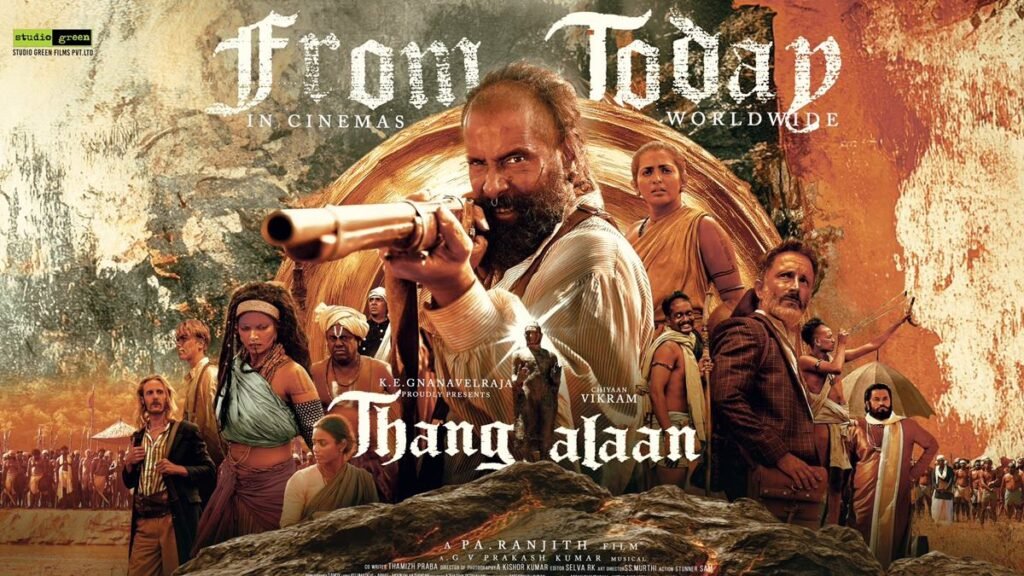
Character Introduction and Storytelling: The remembrance of Thangalaan’s ancestors through storytelling quickly reminded me of my grandfather, Mr. Murugan. He was almost like Thangalaan in terms of structure and character—bold and never hesitating to ask for his rights when needed. The way he poured love into us is really close to my heart, even though he is no longer alive.
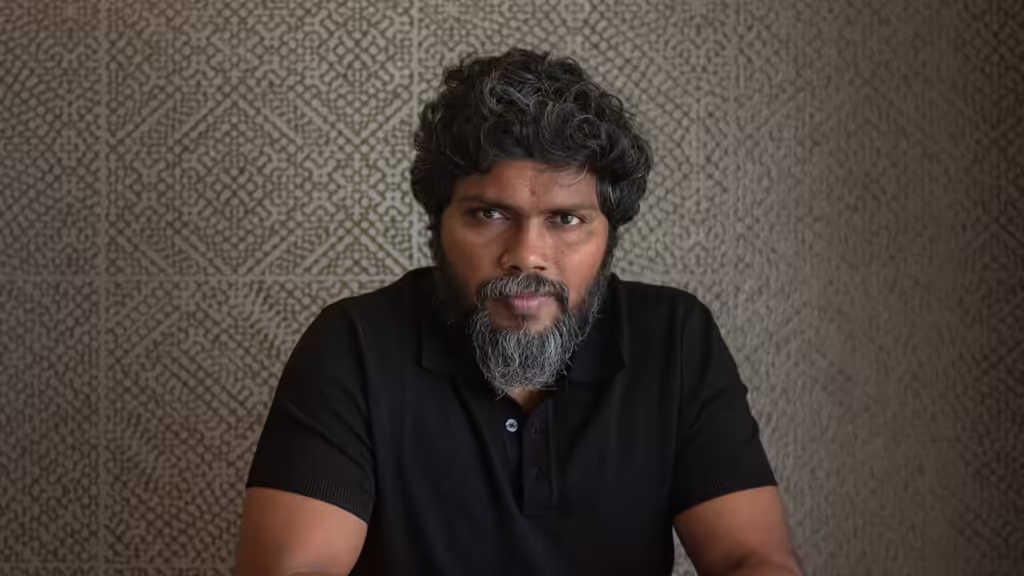
First Half: Pa. Ranjith covers 80% of the trailer’s footage within the first portion of the movie. It felt like a climax within the first 30-40 minutes (I don’t remember the exact timeline). The acting by Vikram, Maalavika Mohan as Aarathi, and Parvathy as Gangama is well-established, and they almost extracted their highest output before the intermission.
Second Half: As I sat in my seat, I wondered what could be next. Most of the second half was not revealed in the trailer, keeping me on the edge of my seat, even though I was provided with a luxurious seat to watch the film. By the way, I got neck pain from not sitting properly.
After the intermission, the movie quickly dives into themes of gold hunting, greed, wealth production, fulfilling Brahmin desires, and betraying the poor. These elements come so quickly that they don’t give you time to react. Suddenly, the climax is displayed just like a portion of the movie, and it ends before you realize it.
Themes and Politics: Pa. Ranjith honestly records the life of Dalits over 200 years, showing how they lost their land, how landlords tricked them into becoming slaves, and how they were exploited. The Dalit people’s demands were simple—they just expected proper wages for their work. This film shows how Indian landlords and British men used them and discarded them once their desires were fulfilled.
The movie talks about Brahmin varnasam, how casteist Hindus were irritated when Dalits became independent and had basic needs like food, clothes, and land. The film also highlights how British men appreciated the work and talent of people who were treated as untouchable by their own countrymen.
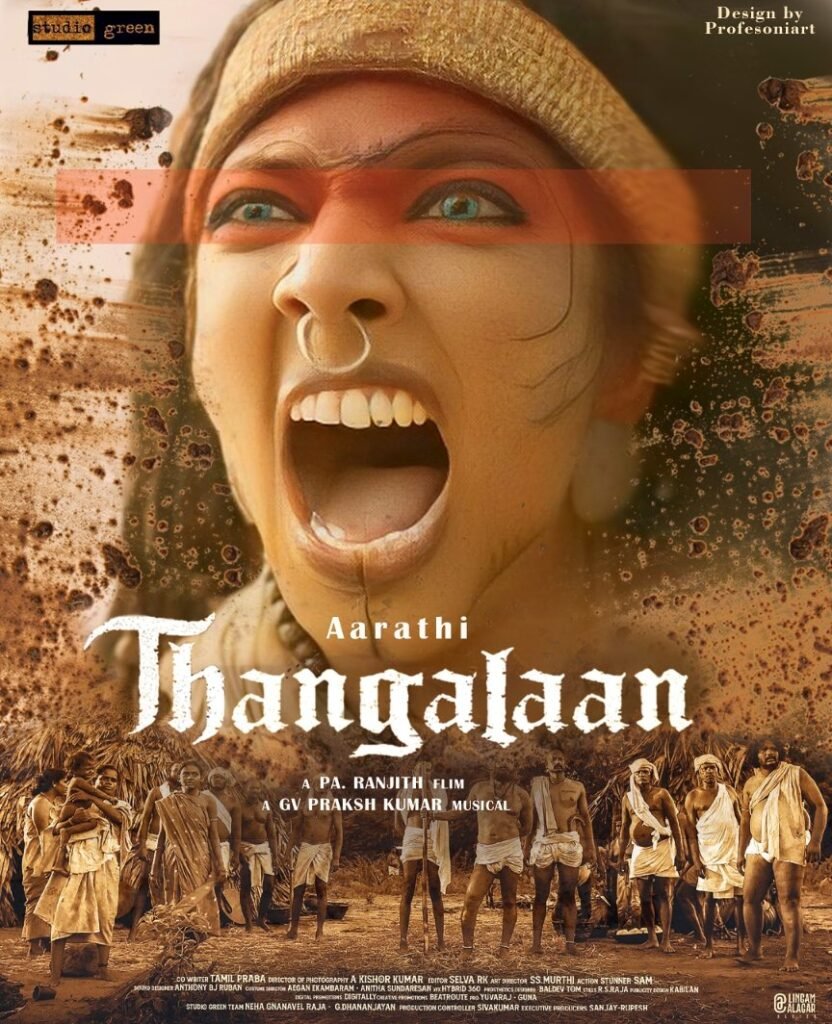
Cinematic Excellence: There is so much detailed politics in every frame that decoding it all is really not possible in the first watch. Maybe watching it 4-5 times would give you more details. Pa. Ranjith’s filmmaking in this movie is definitely a milestone in Indian cinema and can easily be treated as a reference for period films in Kollywood. G.V. Prakash’s music is magical—silent, surprising, and loud, and it goes away once it is done. Unlike the loud music in “Ponniyin Selvan 1” and “Ponniyin Selvan 2,” this one is really good and doesn’t cause any pain.
Post-Movie Advice: After watching the movie, please take some time to relax if you are driving, especially if you plan to watch it at night. The movie is so colorful that your eyes may take some time to adjust, and you may not see the roads properly. Driving requires a lot of concentration, so please relax before taking your vehicle. In fact, I almost hit a curb instead of reversing. I quickly realized and corrected it, and I also felt like Aarathi was following me.
Conclusion: Overall, it was a great experience. Don’t forget to watch it in the theater to feel the same
.